How to Improve Indoor Air Quality in Dallas: The Ultimate Homeowner’s Checklist
September 2, 2026 17 min read

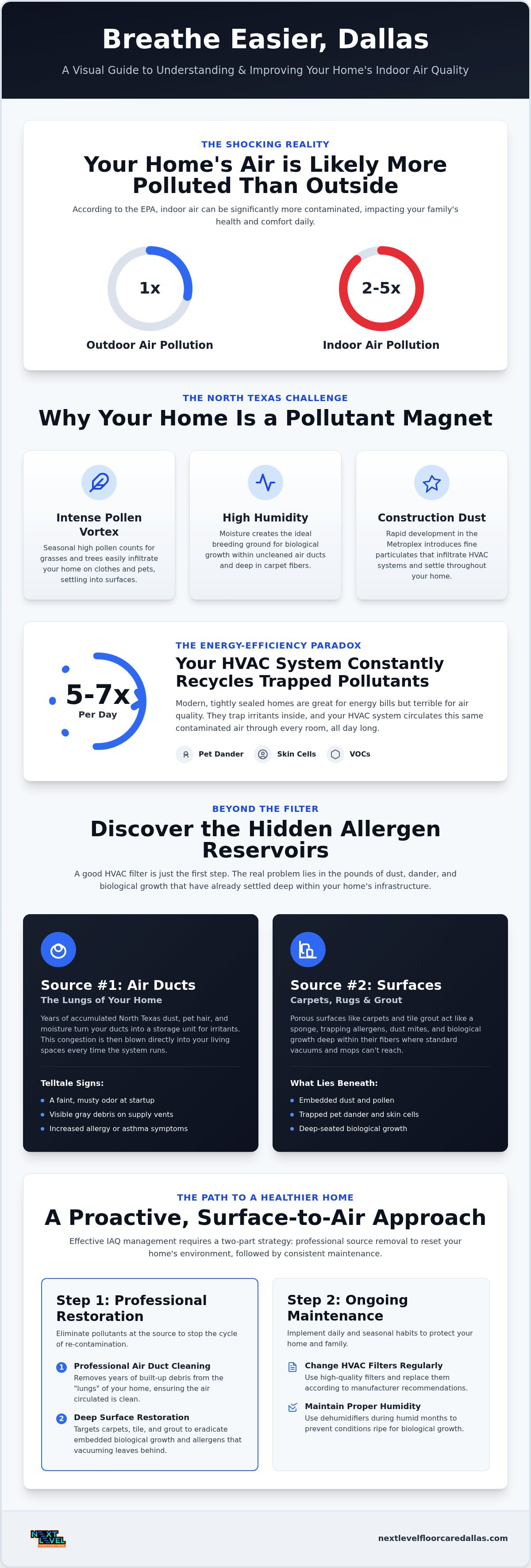
Did you know the EPA reports that the air inside your home is often two to five times more polluted than the air outside? For North Texas families spending 90% of their time indoors, that statistic is more than just a number; it is the reason your eyes itch and your throat feels scratchy the moment you walk through the front door. You might feel like you're constantly fighting a losing battle against the fine layer of gray dust that settles on your furniture every single night. If you want to truly improve indoor air quality dallas living demands a strategy that looks deeper than a simple HVAC filter swap.
We understand how exhausting it is to manage a home that never feels quite clean enough. You deserve a space that supports your well-being rather than taxing your respiratory system. In this guide, you will discover a professional surface-to-air approach designed to eliminate allergens at the source and keep them from returning. We'll walk through the essential steps for maintaining your home's "lungs," the impact of professional surface care, and how to distinguish between quick DIY fixes and the deep restorative actions that provide long-term security for your family.
Key Takeaways
- Learn why North Texas environmental factors like high pollen and humidity make indoor air up to five times more polluted than the outdoors.
- Discover how to improve indoor air quality dallas residents need by shifting focus from simple filtration to comprehensive source removal.
- Understand the critical role of air ducts as the lungs of your home and why keeping them clear is vital for respiratory health.
- Identify how professional surface restoration for carpets and tile eliminates deep-seated biological growth that standard vacuuming leaves behind.
- Access a practical checklist of daily habits and professional milestones to protect your home’s longevity and your family’s well-being.
Understanding the Dallas Air Quality Challenge: Why Your Home Feels Dusty
The EPA estimates that indoor air can be two to five times more polluted than the air outside. For Dallas homeowners, this isn't just a clinical statistic. It is the reason you see dust motes dancing in the sunlight even after a deep clean. To truly improve indoor air quality dallas families must first understand the invisible forces at work within their own four walls. While visible dust on a coffee table is frustrating, it's the microscopic allergens that often cause the most irritation.
Developing a deeper understanding of Indoor air quality (IAQ) is the first step toward reclaiming a healthy home environment. In North Texas, our homes act as filters for everything happening outside, from seasonal shifts to the city's ongoing expansion. When these particles enter, they don't simply disappear; they settle into the very fabric of your living space. This creates a cycle of accumulation that impacts your comfort and your home's longevity.
Local Environmental Factors: Pollen, Construction, and Humidity
North Texas is famous for its intense "pollen vortex." In September 2026, pollen levels for Bermuda, Johnson, and Timothy grasses remain high, making it nearly impossible to keep outdoor allergens from hitching a ride inside on clothing or pets. This natural challenge is compounded by the Metroplex's rapid growth. Construction dust from new developments often infiltrates residential vents, introducing fine particulates that standard cleaning cannot reach. High humidity levels in Dallas also play a role. Moisture can settle in uncleaned air ducts, creating an environment where biological growth thrives, further degrading the air you breathe every day.
The Reality of 'Recycled Air' in Dallas Homes
Modern homes are designed to be "tight" to maximize energy efficiency. While this helps manage your electric bill during a scorching Texas summer, it creates a trap for pollutants. Your HVAC system circulates the same air five to seven times every day. This means pet dander, skin cells, and volatile organic compounds (VOCs) are constantly redistributed throughout your bedrooms and living areas. Opening a window might seem like a simple relief, but in the sweltering heat, it often just invites more humidity and outdoor allergens inside. You aren't getting fresh air; you're just adding to the collection of irritants already trapped in your carpets and vents.
- Constant Recirculation: Pollutants move through your home 5-7 times daily.
- Trapped Irritants: Tight seals keep energy in but also keep dander and VOCs from escaping.
- The Heat Barrier: Dallas temperatures make natural ventilation impractical for most of the year.
The Hidden Reservoirs of Allergens: Beyond the HVAC Filter
Many homeowners believe that upgrading to a high-efficiency furnace filter is the final step to improve indoor air quality dallas. While a quality filter is your first line of defense, it only captures what is currently floating through your HVAC unit. It doesn't address the pounds of dust, dander, and pollen that have already settled deep within your home's infrastructure. Think of these settled particles as a hidden reservoir. Every time your air conditioner kicks on or a family member walks across the room, these pollutants are launched back into your breathing zone.
Effective air quality management requires looking beyond the mechanical components of your HVAC system. Even with top-tier filtration, the EPA recommends several strategies to improve indoor air quality, with source control being the most effective. By removing the pollutants at their resting place, you stop the cycle of re-contamination before it starts. This proactive approach protects your family's health and preserves the longevity of your home's interior surfaces.
Air Ducts: The Source of Circulating Pollutants
Your air ducts act as the lungs of your home. When they become congested with years of North Texas dust and pet hair, they struggle to provide the clean, restorative air your family needs. You might notice a faint, musty odor when the heat or AC first turns on. Or perhaps you see fine gray debris clinging to the edges of your supply vents. These are clear signs that your ventilation system is no longer a pathway for fresh air, but a storage unit for irritants. Investing in professional air duct cleaning dallas tx removes these odors and debris at the source. It's about more than just a quick vacuum; it's about a deep, methodical reset of your home's respiratory system.
Flooring: The Magnet for Microscopic Allergens
Your floors are the largest "sinks" for allergens in your house. Carpets, in particular, act like a massive filter that traps pollutants. This is actually a benefit until the fibers become saturated. Once a carpet is "full," every footstep acts like a bellows, puffing microscopic dust back into the air. Similarly, tile and grout are often more porous than they appear. These small pits and crevices can harbor bacteria and mold spores that standard mopping simply cannot reach. Scheduling residential carpet cleaning dallas ensures these deep-seated irritants are extracted rather than just shifted around. For a truly comprehensive result, consider a professional surface-to-air evaluation to identify where your home is holding onto the most dust.
Evaluating Your Home’s IAQ: Testing vs. Source Removal
When homeowners look to improve indoor air quality dallas experts often point toward professional testing as a starting point. In the North Texas area, professional air quality testing typically costs between $303 and $616 in 2026. While these reports provide a detailed breakdown of what is in your air, they don't actually fix the underlying issue. It's like buying a thermometer when you already know you have a fever; it confirms the problem but doesn't provide the cure. For many families, investing that budget directly into source removal provides a much higher return on health and comfort.
According to the EPA's guide to indoor air quality, controlling the source of pollutants is the most effective way to protect your living environment. Monitoring is useful for peace of mind, but restoration is what actually removes the weight of allergens from your living space. By shifting your focus from monitoring to stewardship, you can preserve the longevity of your home and ensure a safer environment for your loved ones.
Identifying Common Household Triggers
Many triggers hide in plain sight. That "new house smell" in a Plano or Frisco development is often VOC off-gassing from fresh paint, adhesives, or flooring materials. Pet dander is another persistent offender. It doesn't just sit on the surface; it weaves itself into the base of carpets and rugs. Even your bathroom can contribute to whole-home issues. Mold spores from a poorly ventilated shower can travel through the air and settle in your HVAC vents, where they are redistributed daily. Recognizing these triggers is the first step toward a cleaner, more manageable home.
Why High-MERV Filters Aren’t a Magic Bullet
It's tempting to buy the highest MERV-rated filter available at the hardware store. However, filters with extremely high ratings can actually strain your HVAC system by restricting airflow. This makes your unit work harder, which can shorten its lifespan and increase energy costs. A clean, standard filter is far more effective than a high-performance one that is clogged by a dirty duct system. Source removal must precede filtration for optimal IAQ. Focusing on source removal is the most efficient way to improve indoor air quality dallas homeowners can pursue. By cleaning the ducts and floors first, you ensure your filter is catching new particles rather than struggling against years of old accumulation.
The Step-by-Step Checklist for Healthier Indoor Air in Dallas
Maintaining a home in North Texas requires a proactive rhythm to stay ahead of environmental stressors. You don't need to do everything at once. Small, consistent actions prevent the accumulation of the microscopic irritants that degrade your living environment. This checklist provides a methodical approach to improve indoor air quality dallas families can follow to ensure long-term domestic harmony and health.
Immediate Actions for Dallas Homeowners
Clean air starts at your front door. High-quality walk-off mats are essential for trapping the fine construction dust common in rapidly growing areas like Frisco and South Lake before it enters your living space. Once inside, your focus should shift to humidity management. Keeping your home's humidity between 30% and 50% is the ideal range to prevent mold growth while preserving the longevity of your woodwork. For weekly maintenance, always use a vacuum equipped with a certified HEPA filter. Standard vacuums often exhaust the smallest allergens back into your breathing zone; a HEPA filter ensures those particles stay trapped in the canister where they belong.
- Daily: Use exhaust fans in kitchens and bathrooms to vent moisture and VOCs.
- Weekly: Dust hard surfaces with damp microfiber cloths to capture rather than scatter particles.
- Monthly: Inspect your HVAC filters and check supply vents for visible debris or gray "fuzz."
- Annually: Schedule a professional deep cleaning of your air ducts and carpets to reset your home’s baseline.
The Seasonal Deep-Clean Schedule
Your home's needs change alongside the Texas seasons. During the spring, your primary goal is mitigating the "pollen vortex." This involves wiping down window sills and checking seals to keep the yellow dust from settling into your carpets. In the fall, the priority shifts to preparing your ventilation system for furnace season. Dust that has accumulated during the stagnant summer months can create a burnt odor and trigger respiratory irritation when the heat first kicks on.
If your home feels like it has reached a point of congestion, a total reset is often the most efficient path forward. Our New Customer Package is designed to address both the air you breathe and the surfaces you touch in one streamlined visit. This comprehensive approach removes the burden of accumulated allergens, giving you a fresh start for the season ahead. Ready to experience a cleaner, more breathable home? Contact our specialists today to schedule a professional evaluation and reclaim your peace of mind.
Professional Restoration: Resetting Your Home’s Air Quality
Daily cleaning is a noble effort. However, even the most diligent homeowner eventually hits a wall where standard household tools aren't enough to improve indoor air quality dallas requires for true comfort. Professional restoration is about more than just aesthetics; it's a deep-seated reset of your home’s environmental baseline. By targeting the hidden reservoirs of dust and biological growth, you reclaim a space that feels lighter and smells cleaner. This process replaces the anxiety of persistent allergens with the relief of a safe, managed environment.
Air purity is equally dependent on the state of your flooring. Carpets act as a secondary filter, holding onto pollutants that would otherwise remain airborne. Professional carpet extraction reaches deep into the fibers to remove what a standard vacuum leaves behind. Similarly, specialized cleaning for tile and grout removes the invisible biological growth that thrives in porous surfaces. It's a comprehensive strategy that bridges the gap between surface cleanliness and the air you breathe every day.
The Next Level Approach to Air Duct Cleaning
We treat your air ducts as the lungs of your home. Over time, these passages collect more than just fine dust. They harbor pet dander, pollen, and microscopic debris that your HVAC filter simply cannot reach. Our specialized equipment uses high-power source removal techniques to extract these contaminants without releasing them into your living areas. This process doesn't just clear the air; it improves your HVAC system’s efficiency by allowing for unrestricted airflow. "Professional duct cleaning is the only way to remove the five to forty pounds of dust typically found in a home's ventilation system." This restorative step ensures your system is working for you, not against you, to improve indoor air quality dallas families depend on.
Surface Sealing: Locking Out Pollutants
Once your surfaces are restored, the goal shifts to long-term stewardship. Sealing your grout and stone is a critical step in preventing future contamination. These porous materials naturally want to absorb moisture and bacteria, which can lead to odors and degraded air quality over time. A professional seal acts as a protective barrier, making your daily maintenance more effective and preserving the craftsmanship of your home. You can learn more about this process in our guide to professional floor restoration dallas.
Taking the next step toward a healthier home doesn't have to be overwhelming. By focusing on source removal and long-term protection, you create an environment where your family can thrive. Breathe easier with a professional home deep clean from Next Level and enjoy the lasting security of a truly clean living space.
Reclaiming Your Home's Harmony
Your home should be a sanctuary where your family can breathe easily and rest without the burden of persistent allergens. We've explored how the unique North Texas environment challenges your indoor space and why a surface-to-air strategy is the most effective path forward. By focusing on source removal rather than just monitoring, you stop the cycle of dust and irritation at its origin. Every proactive step you take, from managing humidity to professional extraction, preserves the longevity of your home's most important surfaces.
If you're ready to improve indoor air quality dallas living requires, we're here to help as your neighborly protective specialists. As a locally owned and family-operated business, we take pride in the details that ensure your peace of mind. Our Expert Air Duct Cleaning removes the heavy accumulation that standard filters miss, and our New Customer Package savings provide a streamlined way to reset your entire environment. You don't have to settle for persistent dust or respiratory discomfort any longer.
Schedule your Dallas Indoor Air Quality Reset today and experience the restorative power of a truly clean home. A healthier, more manageable living space is just a click away.
Frequently Asked Questions
How often should I clean my air ducts in Dallas?
Every 3 to 5 years is the standard recommendation, though local factors like the North Texas "pollen vortex" or pet ownership might require more frequent attention. If you've recently completed a home renovation in Plano or Frisco, construction dust can settle in your vents immediately. Regular maintenance protects your home's longevity and prevents your HVAC system from circulating years of accumulated debris. This proactive stewardship ensures your family breathes cleaner air throughout the year.
Can dirty carpets really affect the air quality in my home?
Yes, carpets act as a massive air filter that traps pollutants until they reach capacity. Once fibers are saturated with pet dander and outdoor allergens, every step releases microscopic dust back into your breathing zone. Professional carpet cleaning extracts these deep-seated irritants rather than just shifting them around. This process is essential to improve indoor air quality dallas homeowners need for a truly restorative living environment. It replaces your anxiety with the relief of a safe, managed space.
What is the best HVAC filter for Dallas allergies?
A MERV 11 to 13 filter strikes the ideal balance between capturing fine allergens and maintaining proper HVAC airflow. While higher MERV ratings catch more particles, they can also strain your system and lead to premature wear. It's best to consult your system's specifications for the safest fit. Remember that even the best filter can't fix a congested duct system. Source removal should always be your first priority for long-term safety and domestic harmony.
Does air duct cleaning actually reduce dust on my furniture?
Absolutely, because it removes the source of circulating debris that settles on your surfaces daily. When your air ducts are congested, your HVAC system acts like a blower, constantly redistributing fine gray dust throughout your home. Cleaning the "lungs" of your house prevents this cycle of accumulation. You'll notice a cleaner-smelling home and significantly less time spent wiping down furniture in your Dallas or South Lake living areas. It's a simple way to simplify your life.
Is indoor air really more polluted than the air in Dallas?
Indoor air is often two to five times more polluted than outdoor air according to the EPA. Modern homes are built with tight seals for energy efficiency, which unfortunately traps pet dander, VOCs, and allergens inside. In a city like Dallas, where high pollen counts and construction dust are common, these pollutants accumulate quickly. This creates an environment where indoor air quality can degrade much faster than you might expect, making professional source removal vital for your well-being.
How do I know if my air ducts need professional cleaning?
Look for visible dust buildup on vent covers or a faint, musty odor when your system first kicks on. If you notice "fuzzy" gray debris clinging to the edges of your supply registers, it's a clear sign your ducts are congested. Other indicators include unexplained allergy symptoms indoors or a layer of dust that returns quickly after cleaning. These signs suggest your ventilation system needs a professional restorative reset to protect your home's longevity and air purity.
What are the signs of poor indoor air quality I should look for?
Persistent respiratory irritation, such as itchy eyes, sneezing, or a scratchy throat, is a primary warning sign. You might also notice lingering odors that don't seem to go away or a general feeling of stuffiness in certain rooms. If your furniture requires constant dusting or your HVAC filters get dirty faster than usual, your home likely has a high concentration of airborne pollutants. These factors indicate a need for professional intervention to improve indoor air quality dallas families deserve.
Will professional tile and grout cleaning help with mold smells?
Yes, because grout is a porous material that can harbor bacteria and mold spores deep beneath the surface. Standard mopping often just pushes dirty water into these crevices, feeding the growth rather than removing it. Professional tile and grout cleaning uses deep extraction to eliminate these biological contaminants. Following this with a professional seal locks out moisture and prevents future odors. This process preserves the craftsmanship of your surfaces and ensures a healthier, more manageable living environment.
Frequently Asked Questions
Every 3 to 5 years is the standard recommendation, though local factors like the North Texas "pollen vortex" or pet ownership might require more frequent attention. If you've recently completed a home renovation in Plano or Frisco, construction dust can settle in your vents immediately. Regular maintenance protects your home's longevity and prevents your HVAC system from circulating years of accumulated debris. This proactive stewardship ensures your family breathes cleaner air throughout the year.
Yes, carpets act as a massive air filter that traps pollutants until they reach capacity. Once fibers are saturated with pet dander and outdoor allergens, every step releases microscopic dust back into your breathing zone. Professional carpet cleaning extracts these deep-seated irritants rather than just shifting them around. This process is essential to improve indoor air quality dallas homeowners need for a truly restorative living environment. It replaces your anxiety with the relief of a safe, managed space.
A MERV 11 to 13 filter strikes the ideal balance between capturing fine allergens and maintaining proper HVAC airflow. While higher MERV ratings catch more particles, they can also strain your system and lead to premature wear. It's best to consult your system's specifications for the safest fit. Remember that even the best filter can't fix a congested duct system. Source removal should always be your first priority for long-term safety and domestic harmony.
Absolutely, because it removes the source of circulating debris that settles on your surfaces daily. When your air ducts are congested, your HVAC system acts like a blower, constantly redistributing fine gray dust throughout your home. Cleaning the "lungs" of your house prevents this cycle of accumulation. You'll notice a cleaner-smelling home and significantly less time spent wiping down furniture in your Dallas or South Lake living areas. It's a simple way to simplify your life.
Indoor air is often two to five times more polluted than outdoor air according to the EPA. Modern homes are built with tight seals for energy efficiency, which unfortunately traps pet dander, VOCs, and allergens inside. In a city like Dallas, where high pollen counts and construction dust are common, these pollutants accumulate quickly. This creates an environment where indoor air quality can degrade much faster than you might expect, making professional source removal vital for your well-being.
Look for visible dust buildup on vent covers or a faint, musty odor when your system first kicks on. If you notice "fuzzy" gray debris clinging to the edges of your supply registers, it's a clear sign your ducts are congested. Other indicators include unexplained allergy symptoms indoors or a layer of dust that returns quickly after cleaning. These signs suggest your ventilation system needs a professional restorative reset to protect your home's longevity and air purity.
Persistent respiratory irritation, such as itchy eyes, sneezing, or a scratchy throat, is a primary warning sign. You might also notice lingering odors that don't seem to go away or a general feeling of stuffiness in certain rooms. If your furniture requires constant dusting or your HVAC filters get dirty faster than usual, your home likely has a high concentration of airborne pollutants. These factors indicate a need for professional intervention to improve indoor air quality dallas families deserve.
Yes, because grout is a porous material that can harbor bacteria and mold spores deep beneath the surface. Standard mopping often just pushes dirty water into these crevices, feeding the growth rather than removing it. Professional tile and grout cleaning uses deep extraction to eliminate these biological contaminants. Following this with a professional seal locks out moisture and prevents future odors. This process preserves the craftsmanship of your surfaces and ensures a healthier, more manageable living environment.