How to Master Quartz Countertop Protection in Dallas: A Homeowner's Guide
August 27, 2026 16 min read
Your $14,000 quartz countertop investment isn't as "indestructible" as the showroom salesman promised, especially when facing the unique minerals found in North Texas water. While many believe these surfaces are entirely maintenance-free, the reality of quartz countertop protection in Dallas involves more than just a quick wipe. You likely chose quartz for its beauty and its reputation for rugged durability. It's a smart choice for a busy home. However, seeing a cloudy residue develop or worrying about a permanent coffee ring shouldn't be part of your daily experience.
We understand the frustration of receiving conflicting advice regarding whether to seal, scrub, or simply wait. Our goal is to replace that uncertainty with the quiet confidence of a well-managed home. In this guide, you'll learn the essential steps to safeguard your surfaces from local environmental challenges while ensuring their lasting value. We will cover a simple daily cleaning rhythm, the truth about protecting non-porous stone, and exactly how to handle the stubborn minerals that characterize our local water. You deserve peace of mind and a kitchen that remains a source of pride for years to come.
Key Takeaways
- Understand the "90/10" composition of your surfaces to better protect the delicate resin binders from heat and chemical damage.
- Identify why common "natural" cleaners like vinegar or lemon juice can lead to permanent etching and a loss of surface luster.
- Master a practical daily routine for quartz countertop protection dallas families can use to prevent staining and mineral buildup.
- Learn the difference between basic daily maintenance and the specialized topical sealants that offer a higher level of surface stewardship.
- Gain peace of mind by knowing when to enlist professional expertise to restore and preserve your kitchen's long-term value.
What is Quartz Countertop Protection and Why Does Dallas Need It?
Quartz countertop protection in Dallas is more than a simple cleaning spray. It's a comprehensive, multi-layered approach to preserving one of your home's most significant investments. This strategy involves chemical sealing to repel pigments, physical barriers like trivets to block heat, and a consistent maintenance routine that respects the material's unique chemistry. True protection means understanding that while quartz is engineered for strength, it still requires active stewardship to maintain its factory-fresh luster.
To master this care, you first need to understand the "90/10" rule. Your countertops are roughly 90% natural stone aggregates, such as quartz or granite, held together by 10% petroleum-based resin binders. While the stone itself is incredibly hard, those resins are sensitive to chemicals and temperature. In the competitive DFW real estate market, surface stewardship isn't just about cleanliness. It's about protecting the long-term resale value of your property by preventing the gradual degradation that occurs in our unique climate.
The Myth of Quartz Invincibility
Many homeowners are told that quartz is completely "stain-proof" and "heat-proof" during the sales process. This is a dangerous misconception. The stone particles are indeed tough, but the resin binders are the weak link in the chain. These binders can react with acidic cleaners or absorb dark pigments if spills sit too long. Resin scorch is a permanent chemical change caused by heat exceeding 300 degrees. Once this discoloration occurs, it cannot be "cleaned" away because the material has structurally changed. We see this often when hot roasting pans are placed directly on the surface, leaving behind a ghost-like mark that dampens the beauty of the kitchen.
Dallas Environmental Factors: Hard Water and UV
Living in the Dallas metroplex introduces specific challenges that manufacturers in other regions might overlook. North Texas is known for high mineral content in its water supply. Over time, this hard water creates a stubborn "mineral haze" on dark quartz surfaces, making them look perpetually dusty or cloudy. In areas like Frisco and South Lake, large windows often flood kitchens with intense sunlight. This high UV index can cause the resin binders to yellow or become brittle over time. "Maintenance-free" is a popular marketing term, but it's not a technical reality for a home that actually gets used. Proper care ensures your surfaces remain a point of domestic harmony rather than a source of stress.
Identifying Common Threats to Your Kitchen Surfaces
Understanding the specific vulnerabilities of your stone is the first step toward true quartz countertop protection dallas homeowners can rely on. While we established that the resin binders are the "weak link," identifying the daily habits that stress these binders is essential. Most damage doesn't happen in a single catastrophe. It's usually the result of cumulative chemical or thermal stress that eventually compromises the surface's integrity.
Chemical etching is a common frustration for those who prefer "natural" cleaning methods. Many Plano residents reach for vinegar or lemon juice to disinfect their kitchens. These acids are aggressive. They don't just clean; they can eat away at the resin finish, leaving behind a dull, matte spot known as an etch. This isn't a stain that can be scrubbed away. It's a physical change to the surface texture that requires professional attention to fix.
Pigment staining also poses a quiet threat. Even though quartz is non-porous, pigments from turmeric, red wine, or ink can bond to the resin binders if left too long. Prompt spill management is your best defense. If you've noticed your surfaces losing their clarity or holding onto shadows of past spills, a professional countertop protection assessment can help restore that original brilliance and provide a fresh start for your kitchen.
Chemical Sensitivities You Should Know
Keep high-pH substances like oven cleaners and low-pH acids away from your counters. Bleach is particularly risky for quartz. It can cause a chemical reaction that yellows the resin permanently, especially in sun-drenched kitchens in South Lake. For daily care, stick to pH-neutral soaps. These gentle cleaners respect the stone's chemistry while effectively removing grease and grime without the risk of long-term damage.
Thermal Shock and Mechanical Stress
Placing a hot Texas-sized roasting pan directly on the surface is a recipe for disaster. Quartz is a poor conductor of heat. When one small area expands rapidly while the surrounding stone remains cool, the internal stress can lead to a sudden, loud crack. This is thermal shock. Seams are the most vulnerable points in this scenario. The adhesive used to join slabs doesn't expand at the same rate as the quartz. Rapid temperature changes can pop these seams open, leading to costly repairs. Similarly, while quartz is tough, it isn't impact-proof. Dropping a heavy cast-iron skillet near a sink edge can cause unsightly chips that require specialized resin filling to restore.
Comparing Quartz Protection Methods: DIY vs. Professional
Daily maintenance is your first line of defense. It involves using pH-neutral solutions to lift away grease without stripping the factory finish. Many Dallas homeowners find that DIY efforts eventually fall short against our local water quality. Store-bought sprays often leave a streaky residue. They fail to address the underlying mineral buildup. This is where professional quartz countertop protection dallas services provide a necessary transition from basic cleaning to true surface stewardship.
While quartz is marketed as non-porous, it still possesses microscopic voids where pigments and minerals can settle. Topical sealants applied by a professional act as a sacrificial layer. This barrier takes the brunt of daily wear, protecting the resin binders we discussed earlier. Physical barriers, such as stone protection films or laminates, offer heavy-duty defense against etching. These are effective, but they can sometimes alter the natural feel of the stone. For many, a professional deep clean and high-grade sealant strike the perfect balance between protection and aesthetics.
The Role of Professional Sealing
Professional-grade sealers are far superior to hardware store alternatives. They utilize advanced chemistry to fill those microscopic surface voids more effectively. Industrial-strength protection provides a more durable shield against the oils and acids common in a busy kitchen. Beyond the product itself, professional application ensures a streak-free, even finish. We take pride in the details; our technicians ensure every inch of your investment is covered without the cloudy overlap often seen with DIY attempts.
Restoration vs. Simple Cleaning
There is a clear line where household cleaning ends and restoration begins. If your counters have developed a persistent "mineral haze" or light scratches, it's time to consider professional countertop protection services dallas. Restoration involves specialized polishing techniques that remove existing dullness to reveal the factory shine underneath. Our comprehensive New Customer Package is designed for this exact purpose. It provides a total home surface care assessment, allowing our expert technicians to identify specific needs for your Frisco or Plano home. This proactive approach replaces anxiety with the relief of knowing your home is in capable hands.

How to Protect Your Quartz Countertops: A Daily Care Routine
Establishing a consistent rhythm of care is the secret to true surface longevity. While the material is robust, the daily friction of a busy kitchen can gradually dull its finish. Implementing a structured routine ensures that small messes don't turn into permanent eyesores. Effective quartz countertop protection dallas homeowners can manage themselves starts with these five simple steps:
- Step 1: Immediate Spill Management. Blot spills as soon as they happen. Wiping can spread pigments from red wine or coffee across the surface, increasing the risk of absorption into the resin binders.
- Step 2: Daily pH-Neutral Cleaning. Use a dedicated quartz cleaner or a mild, pH-neutral dish soap. Avoid generic "all-purpose" sprays that may contain hidden acids or alkalis.
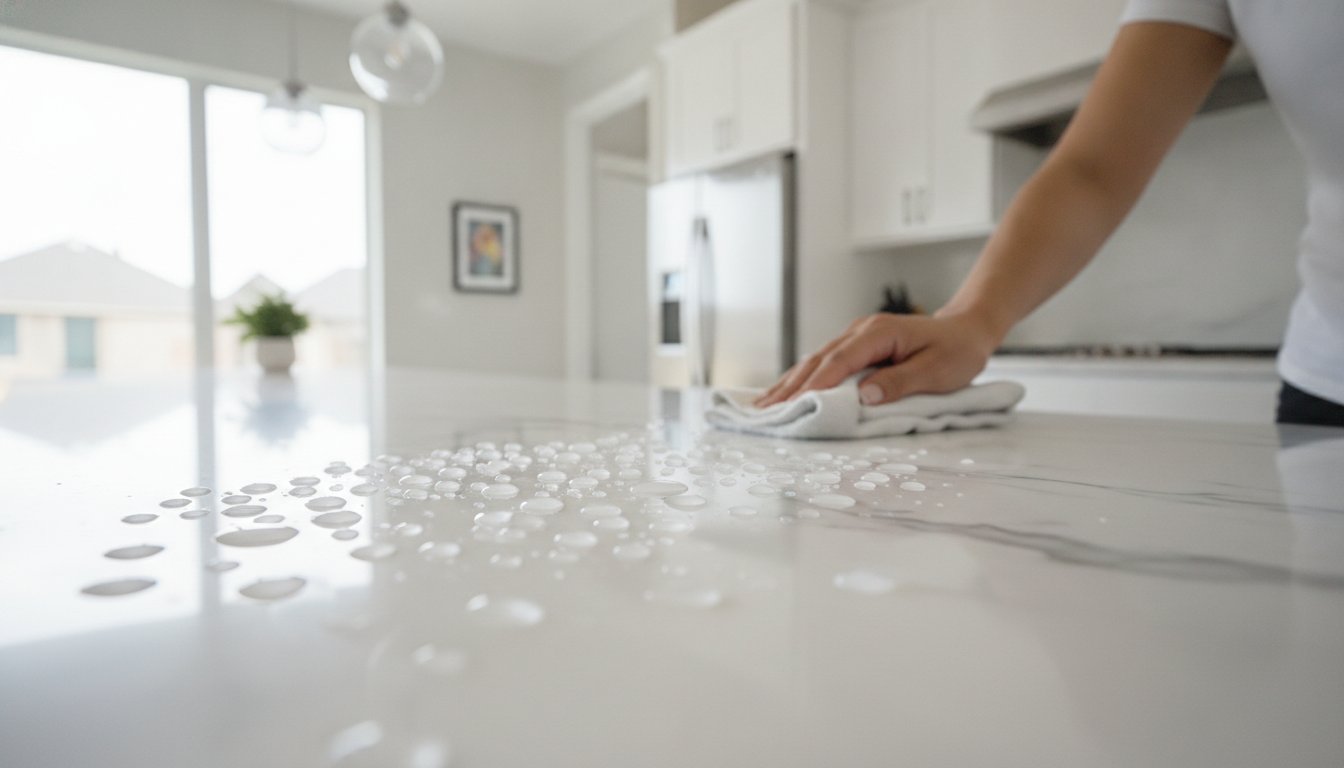
- Step 3: The Microfiber Buff. Always buff the surface dry with a clean microfiber cloth. This prevents the minerals in our local water from settling and creating a cloudy film.
- Step 4: Weekly Tactical Inspection. Run your hand across the surface once a week. If you feel a tactile residue or see a localized "haze," it's time for a deeper, more focused cleaning.
- Step 5: Annual Stewardship Check. Schedule a professional assessment once a year. This ensures the protective seal remains intact and allows a specialist to address minor wear before it requires major restoration.
Managing Hard Water Deposits in North Texas
Calcium rings and white mineral scaling are frequent frustrations in Las Colinas and Plano. These deposits bond tightly to the resin finish, making them difficult to remove with standard wiping. A microfiber cloth is your best friend here because its structure lifts minerals away rather than just moving them around. For a final, streak-free buffing that defies the local water quality, we recommend using a small amount of distilled water. This simple step removes any lingering mineral traces, leaving behind a mirror-like clarity that preserves your kitchen's domestic harmony.
Safe Stain Removal for Common Kitchen Mishaps
For stubborn organic stains like turmeric or berry juice, the "Poultice Method" is highly effective. Create a paste of baking soda and water, apply it to the spot, and let it sit under a damp cloth for a few hours. For ink or adhesive residue, a small amount of isopropyl alcohol on a cotton ball can safely lift the mark without damaging the resin. However, if a stain persists after two attempts, you should stop. Aggressive scrubbing can create micro-marring that permanently alters the light reflection of the stone. To ensure your surfaces are handled with expert care, contact us for a professional countertop protection consultation and let our specialists restore your peace of mind.
Next Level Protection: Professional Stewardship for Your Home
At Next Level Floor Care + More, we don't just clean surfaces; we act as your Protective Specialist. Our approach to quartz countertop protection dallas is rooted in the belief that your home is a sanctuary that deserves meticulous stewardship. We understand the specific environmental stressors of North Texas. From the high mineral content in our water to the intense UV exposure in sun-drenched kitchens, we provide local expertise that national franchises simply can't match. Our goal is to replace your anxiety with a sense of long-term security.
True domestic harmony comes from a home where every surface is preserved. This is why we integrate our countertop care with other essential services. For instance, many of our clients in Frisco and South Lake choose to pair their kitchen maintenance with shower tile restoration dallas. This holistic approach ensures that every high-traffic area in your home remains clean, healthy, and manageable. It's about more than just aesthetics. It's about the peace of mind that comes from a well-maintained living space where your family can thrive.
The Next Level Difference in Dallas
Our focus is on longevity. We treat your home's assets with the respect they deserve. Our methodical approach begins with a comprehensive surface assessment. We identify existing wear, chemical sensitivities, and mineral buildup. Then, we implement restorative outcomes that go beyond a simple wipe-down. We are a family-owned business. We are your neighbors. Our commitment to the Dallas community means we take personal pride in every project. We ensure your investment is protected for the long haul through craftsmanship and lasting quality.
Securing Your Investment Today
Don't wait for a permanent stain or a heat crack to address your surfaces. We invite you to experience our New Customer Package. This offering provides a total home surface care assessment, giving you a clear roadmap for preservation. Scheduling a consultation in Plano or Las Colinas is a simple, stress-free process. A protected home is a happier home. It's more manageable. It's a place where you can focus on making memories rather than worrying about maintenance. Let us help you secure the beauty and value of your home today.
Preserving Your Kitchen's Beauty for the Long Term
Mastering quartz countertop protection dallas involves moving beyond the myth of maintenance-free stone. You now understand how the 90/10 rule makes your resins vulnerable to heat and chemicals. You also have a clear daily rhythm to combat the unique mineral haze caused by North Texas hard water. These small, consistent steps prevent permanent damage while maintaining your home's high resale value.
Expert surface preservation is available for families in Dallas, Frisco, and Plano. As a locally owned partner, we take pride in the craftsmanship required to protect what you already own. Our specialized New Customer Package offers a comprehensive assessment to ensure every surface in your home receives the care it deserves. Protect your investment with professional countertop services from Next Level Floor Care + More today!
You deserve a home that feels manageable and stays beautiful. We're here to help you achieve that lasting domestic harmony.
Frequently Asked Questions
Does quartz really need to be sealed if it's non-porous?
While manufacturers claim quartz is non-porous, professional quartz countertop protection dallas often includes a specialized topical sealer. This isn't because the stone absorbs liquid like granite. Instead, the sealer fills microscopic surface voids and protects the sensitive resin binders. It acts as a sacrificial layer against daily friction. This proactive stewardship ensures your kitchen remains a source of pride rather than a maintenance burden for years to come.
How do I remove hard water stains from my quartz countertops in Dallas?
Removing mineral deposits from North Texas water requires a gentle but methodical touch. Start by applying a pH-neutral stone cleaner and allowing it to sit for several minutes. Use a clean microfiber cloth to lift the softened minerals. For stubborn white rings, a paste of baking soda and water often works wonders. Always finish with a final buff using distilled water to prevent new spots from forming immediately.
Can I use Windex or bleach on my quartz surfaces?
You should avoid both Windex and bleach on your quartz surfaces. Ammonia and high-pH bleaches are too aggressive for the petroleum-based resins that hold your countertop together. Over time, these chemicals can cause the surface to yellow or lose its factory-fresh shine. For a safer, healthier home environment, stick to gentle dish soaps or dedicated stone cleaners that respect the material's delicate chemical balance.
What is the best way to prevent heat damage on quartz?
The most effective way to prevent heat damage is to use physical barriers like trivets or thick hot pads. Remember that quartz can only withstand temperatures up to roughly 300 degrees before the resin binders suffer permanent scorching. This type of damage is a chemical change that cannot be polished away. Taking a moment to place a barrier under your roasting pans preserves the longevity and beauty of your investment.
Why is my quartz countertop looking dull or cloudy?
A cloudy appearance is usually the result of "mineral haze" from local hard water or a buildup of soap film. If you've used generic all-purpose cleaners, they often leave a residue that traps dust and oils. Another possibility is micro-marring from using abrasive scrub pads. These tiny scratches scatter light, making the stone look dull. Professional restoration can often lift these layers to reveal the original luster underneath.
How often should I have my quartz countertops professionally cleaned?
We recommend a professional check-up once every twelve months to maintain optimal quartz countertop protection dallas. This annual rhythm allows a specialist to deep-clean mineral deposits that DIY methods can't reach. It also provides an opportunity to refresh any protective topical coatings. Regular professional care replaces the anxiety of gradual wear with the long-term security of a well-maintained, manageable living space for your family.
Is it possible to repair a chip in a quartz countertop?
Yes, chips near sink edges or corners can typically be repaired by a skilled technician. We use specialized, color-matched acrylic resins to fill the void and restore the surface's structural integrity. Once the resin cures, it's polished to match the surrounding sheen. This process requires a high level of technical competence to ensure the repair is nearly invisible, effectively protecting your home's resale value and domestic harmony.
Are there specific cleaners I should avoid for quartz?
You should steer clear of any "natural" cleaners containing vinegar or lemon juice, as these acids can etch the resin finish. High-alkaline products like oven cleaners or concentrated bleach are equally dangerous. Additionally, never use abrasive scouring pads or steel wool. These tools create permanent scratches that dull the stone's reflection. Stick to soft cloths and pH-neutral solutions to keep your surfaces safe and looking their best.
Frequently Asked Questions
While manufacturers claim quartz is non-porous, professional quartz countertop protection dallas often includes a specialized topical sealer. This isn't because the stone absorbs liquid like granite. Instead, the sealer fills microscopic surface voids and protects the sensitive resin binders. It acts as a sacrificial layer against daily friction. This proactive stewardship ensures your kitchen remains a source of pride rather than a maintenance burden for years to come.
Removing mineral deposits from North Texas water requires a gentle but methodical touch. Start by applying a pH-neutral stone cleaner and allowing it to sit for several minutes. Use a clean microfiber cloth to lift the softened minerals. For stubborn white rings, a paste of baking soda and water often works wonders. Always finish with a final buff using distilled water to prevent new spots from forming immediately.
You should avoid both Windex and bleach on your quartz surfaces. Ammonia and high-pH bleaches are too aggressive for the petroleum-based resins that hold your countertop together. Over time, these chemicals can cause the surface to yellow or lose its factory-fresh shine. For a safer, healthier home environment, stick to gentle dish soaps or dedicated stone cleaners that respect the material's delicate chemical balance.
The most effective way to prevent heat damage is to use physical barriers like trivets or thick hot pads. Remember that quartz can only withstand temperatures up to roughly 300 degrees before the resin binders suffer permanent scorching. This type of damage is a chemical change that cannot be polished away. Taking a moment to place a barrier under your roasting pans preserves the longevity and beauty of your investment.
A cloudy appearance is usually the result of "mineral haze" from local hard water or a buildup of soap film. If you've used generic all-purpose cleaners, they often leave a residue that traps dust and oils. Another possibility is micro-marring from using abrasive scrub pads. These tiny scratches scatter light, making the stone look dull. Professional restoration can often lift these layers to reveal the original luster underneath.
We recommend a professional check-up once every twelve months to maintain optimal quartz countertop protection dallas. This annual rhythm allows a specialist to deep-clean mineral deposits that DIY methods can't reach. It also provides an opportunity to refresh any protective topical coatings. Regular professional care replaces the anxiety of gradual wear with the long-term security of a well-maintained, manageable living space for your family.
Yes, chips near sink edges or corners can typically be repaired by a skilled technician. We use specialized, color-matched acrylic resins to fill the void and restore the surface's structural integrity. Once the resin cures, it's polished to match the surrounding sheen. This process requires a high level of technical competence to ensure the repair is nearly invisible, effectively protecting your home's resale value and domestic harmony.
You should steer clear of any "natural" cleaners containing vinegar or lemon juice, as these acids can etch the resin finish. High-alkaline products like oven cleaners or concentrated bleach are equally dangerous. Additionally, never use abrasive scouring pads or steel wool. These tools create permanent scratches that dull the stone's reflection. Stick to soft cloths and pH-neutral solutions to keep your surfaces safe and looking their best.